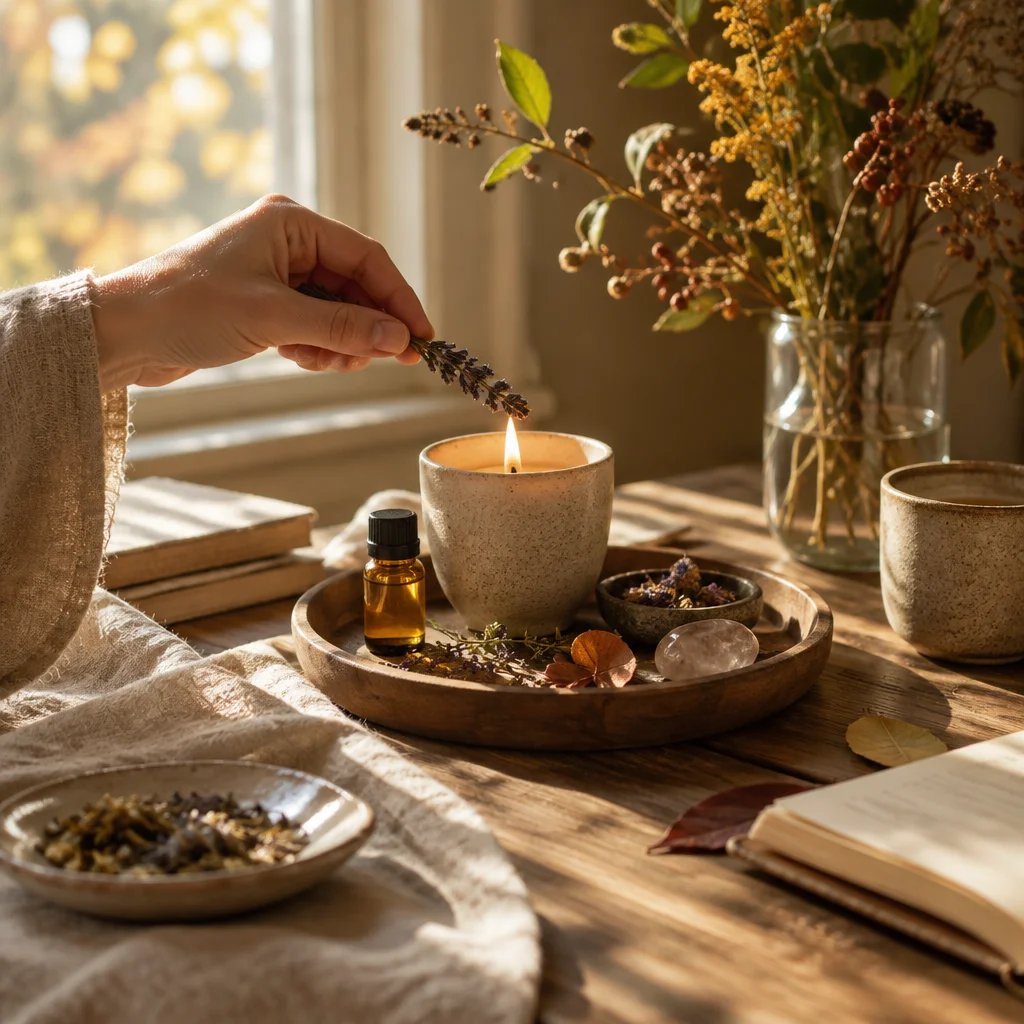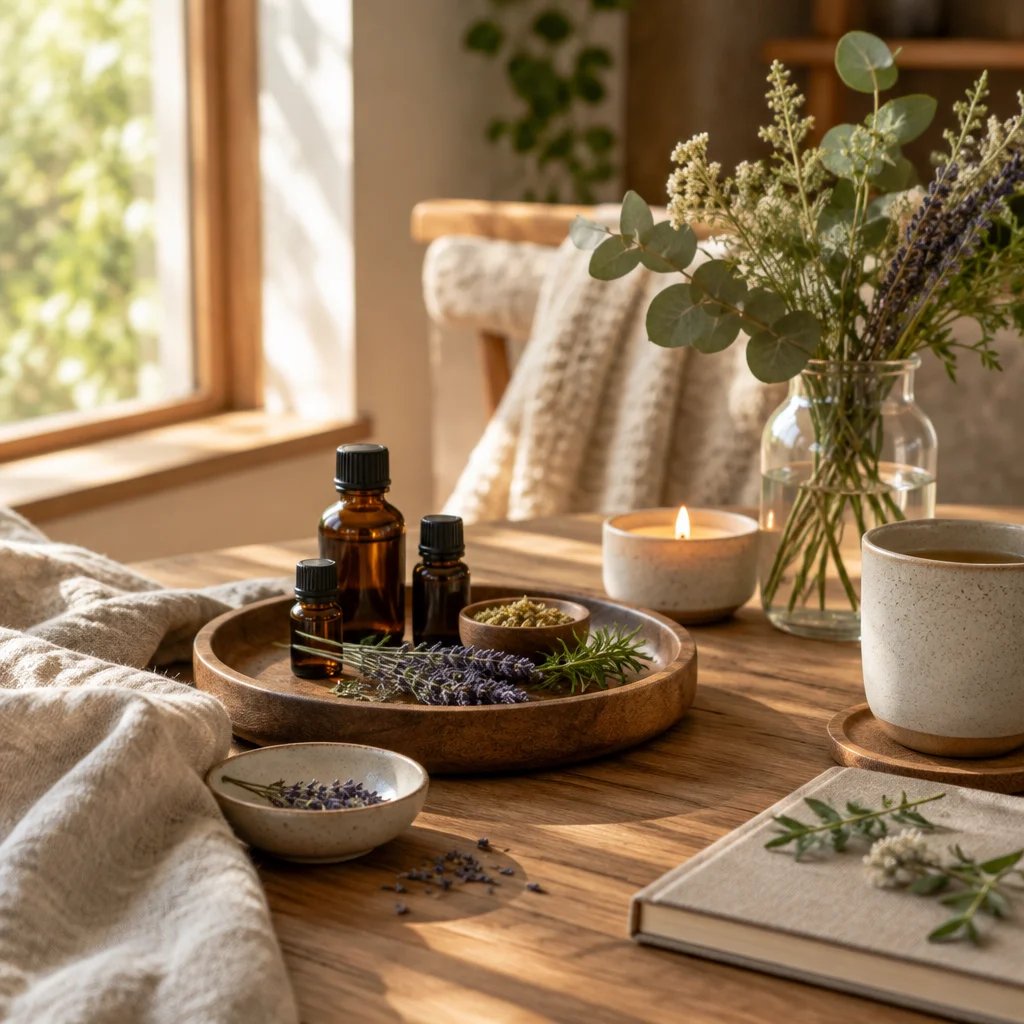


At 7:10 on a November morning, the kettle clicks off while the window is still dark. You could reach for your phone, or take one quiet minute to notice the warmth of the mug in your hands before the day gathers speed. That small choice is not a complete wellness plan, and it does not need to be. Self-care can begin with a repeatable pause that fits the life you actually have, whether it is a morning breath, a candlelit transition after work, or a few pages before bed. The aim is not to perfect your routine. It is to create gentle moments of attention that feel welcoming rather than like another task to complete.
Start with a moment you already have
A ritual is easier to remember when it is attached to something that already happens. Think of the first drink of the day, the walk home, washing your face, or turning off the kitchen light. Add one small action to that moment instead of building an elaborate schedule from scratch.
For example, while tea steeps, take three unhurried breaths and ask what would make the next hour feel manageable. When you come through the door, put your keys in their usual place, change into comfortable clothes, and pause before checking messages. These small cues can help mark a transition between parts of your day. They are not a replacement for rest or support when you need it, but they can create a little room to notice how you are arriving in the moment.
Make the ritual easy to begin
Consider what tends to interrupt your plans. If a quiet half-hour is rarely available, do not make thirty minutes the entry requirement. If you often forget what you need, keep a notebook and pen where you usually sit. If your evenings are unpredictable, choose a practice that can be shortened without feeling like a failure.
A simple ritual might take five minutes: open a window briefly if the weather allows, clear one small surface, and write down a thought you would like to set aside until tomorrow. On another day, the same ritual might be only a pause and a stretch. Flexibility is part of the design. A self-care habit should meet you where you are, not require every day to look the same.
Use the senses as gentle cues
Everyday sensory details can help a moment feel distinct. Soft lighting, a familiar blanket, the sound of rain, or a cup of herbal tea may make a pause feel more inviting. Choose one cue for a particular transition: a favourite playlist while preparing dinner, a warm washcloth as part of an evening routine, or a candle lit while you read.
Keep the experience personal and comfortable. Scent is not enjoyable for everyone, and strong fragrance can bother some people. If you choose incense or a candle, follow its safety instructions, keep it away from anything that can catch fire, and never leave a flame unattended. A scent-free ritual can be just as meaningful. The point is not to create a particular mood on command, but to notice what feels pleasant and appropriate in your space.
Keep reflection kind and practical
Writing can help you close a loop at the end of the day, but it does not have to become a detailed diary. Try a few straightforward prompts: What felt good today? What is taking up space in my mind? What is one small thing I can make easier tomorrow? A short answer is enough. You can also speak a thought aloud, make a note on your calendar, or simply sit with it for a moment.
Let your answers be honest rather than polished. Some days, a useful observation may be that you need an earlier bedtime or that a commitment is stretching you thin. On other days, you may want to remember a kind conversation or a meal you enjoyed. Reflection is a way to listen, not a test of optimism. If journalling starts to feel like pressure, set it aside and choose a quieter form of pause.
Leave room for changing seasons
Routines naturally shift as daylight, work, family needs, and energy change. A morning ritual that works in summer may feel awkward on a dark winter morning. Rather than treating change as a lapse, adjust the practice. Move it to lunchtime, swap an outdoor walk for a few minutes near a bright window, or make the evening version gentler and shorter.
It can help to keep a few options rather than relying on one ideal routine. On a spacious day, you might take a longer walk and prepare a nourishing meal. On a demanding day, a glass of water, a comfortable seat, and a few moments without a screen may be enough. These choices are not all-or-nothing. Their value is in making a little room for yourself amid the day you have.
A lasting self-care ritual is often modest: one cue, one useful action, and enough flexibility to begin again tomorrow. Choose something that feels kind and realistic, then notice how it fits over a week or two. Keep what serves you, change what does not, and remember that a pause does not need to be impressive to count. It only needs to be yours.